

For stainless steel tube manufacturers, annealing is more than a heat-treatment step. It directly affects tube surface quality, mechanical properties, dimensional stability and downstream processing. This is particularly important for ASTM A249 stainless steel tubes, which are widely used in heat exchangers, boilers, condensers and related industrial applications.
When planning a new tube mill or upgrading an existing production line, many buyers face the same question: Bright Annealing vs Black Annealing — which process is more suitable for ASTM A249 tubes?
The answer depends on tube dimensions, surface requirements, production speed and final application.
1. Production Challenges
During forming and welding, stainless steel strip experiences considerable thermal and mechanical stress. Without suitable stainless steel tube heat treatment, residual stress may affect dimensional stability, ductility and subsequent forming operations.
For ASTM A249 production, the annealing system therefore needs to provide stable heating, sufficient holding time and controlled cooling. At the same time, the required surface condition should be considered.
Bright annealing is normally selected when manufacturers need a clean and bright surface with limited oxidation. Black annealing focuses more on effective heat treatment and controlled cooling when a reflective surface is not essential.
Choosing the wrong process can increase energy consumption, create additional finishing work or limit production efficiency.
2. Bright Annealing vs Black Annealing
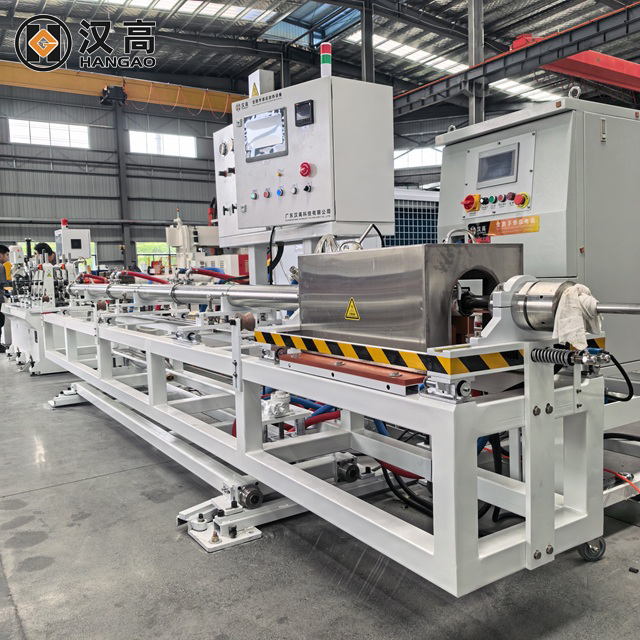
Bright Annealing
Bright annealing stainless steel tubes are heat-treated in a controlled protective atmosphere to minimize oxidation. The tube can maintain a clean metallic appearance after treatment, reducing the need for intensive pickling or surface cleaning.
This process is suitable for manufacturers producing precision stainless steel tubes, heat-exchanger tubes and products where surface cleanliness is important.
Hangao's intelligent insulation bright annealing machine combines controlled heating with an insulation section. The published equipment specification supports treatment temperatures around 1050°C and uses multiple thermocouples for temperature monitoring. The PLC-controlled system is designed to improve temperature stability and reduce unnecessary energy consumption during the insulation stage.
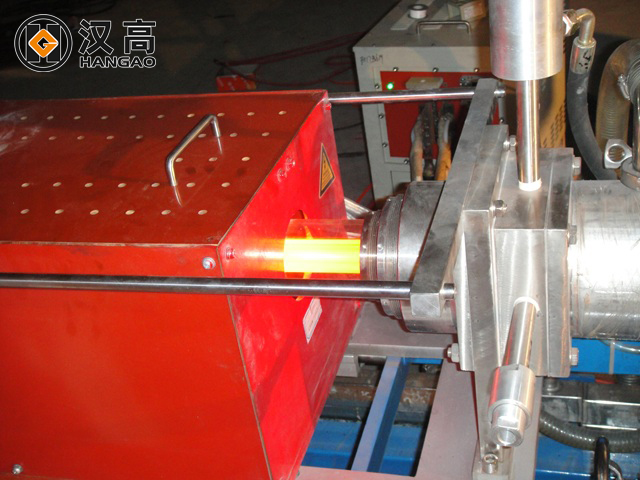
A continuous bright annealing furnace can also be integrated into a tube mill, allowing forming, welding and heat treatment to operate as a continuous production process.
Black Annealing
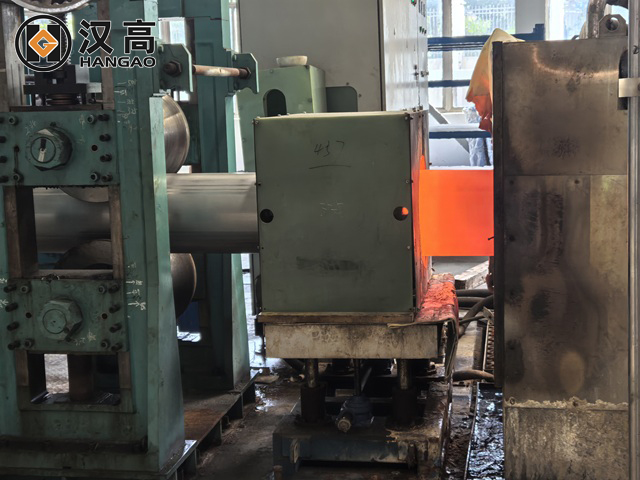
Black annealing stainless steel tubes do not require the same bright surface condition. The main objective is effective heating, solution treatment and controlled cooling.
Hangao's rotary black annealing production line uses induction heating followed by 360° water-spray cooling. The published process operates at approximately 1050–1080°C, depending on production requirements.
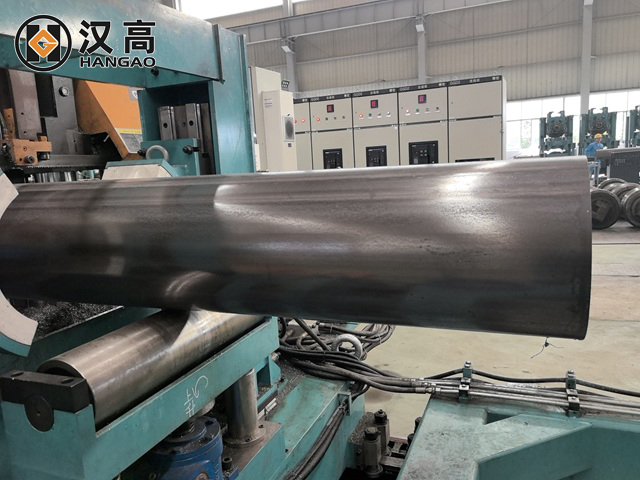
The rotary feeding design keeps the tube moving during heating and cooling, helping improve treatment uniformity. Automatic feeding and unloading are also incorporated into the system. For larger industrial tubes, this configuration can reduce manual handling and help maintain tube straightness.
3. Technical Parameters and Equipment Selection
The correct annealing system should be selected according to the actual tube specification.
| Item | Bright Annealing | Black Annealing |
| Main purpose | Heat treatment + bright surface | Heat treatment + controlled cooling |
| Atmosphere | Protective atmosphere | Black annealing process |
| Heating | Controlled heating | Induction heating |
| Typical temperature | Around 1050°C | Around 1050–1080°C |
| Surface | Bright and clean | Dark/oxidized surface possible |
| Cooling | Controlled cooling | 360° water spray |
| Control | PLC controlled | PLC controlled |
| Typical focus | Precision and surface-sensitive tubes | Industrial and large-diameter tubes |
According to Hangao's published specifications, its bright annealing equipment can cover tube diameters of approximately 6–219 mm, with production speeds of around 1–15 m/min depending on configuration.
The rotary black annealing line is designed for substantially larger tubes, with published specifications covering approximately 219–2030 mm OD, 3–20 mm wall thickness and 5.8–12 m tube lengths. Production speed is listed at approximately 0.1–1.0 m/min.
These differences show why bright annealing vs black annealing for ASTM A249 tubes should not be decided by furnace price alone. OD, wall thickness, material grade, line speed, surface requirements and factory layout all affect the final equipment configuration.
4. Typical Customer Application
Consider a manufacturer producing welded stainless steel tubes for heat-exchanger applications.
If the customer requires a clean metallic surface and wants to minimize post-annealing treatment, bright annealing is generally more appropriate. Integrating the annealing system directly after the tube mill can also simplify production flow.
For larger industrial tubes where surface brightness is less important, black annealing can provide a practical solution. Hangao's rotary system combines automatic feeding, rotary movement, induction heating and water-spray cooling in one production line.
For equipment buyers, the important question is not simply which annealing method is “better”. The production line should be engineered around the tube specification and the customer's final quality requirements.
5. FAQ
1、Is bright annealing mandatory for ASTM A249 tubes?
Not necessarily. ASTM A249 defines requirements for welded austenitic stainless steel tubes, including heat treatment and mechanical properties. The actual surface requirement should also be confirmed with the customer's purchase specification.
2、What is the main difference between bright and black annealing?
Bright annealing uses a controlled atmosphere to minimize oxidation and maintain a bright surface. Black annealing focuses on heat treatment and controlled cooling without the same surface-brightness requirement.
3、Which annealing process is better for heat-exchanger tubes?
The answer depends on the required surface condition, tube size and downstream process. Bright annealing is often considered when surface cleanliness and appearance are important.
4、Can annealing be integrated with a tube mill?
Yes. A continuous annealing system can be positioned after forming and welding, creating a more automated tube production line. The required configuration depends on tube size, production speed and heat-treatment requirements.
5、Can Hangao customize an annealing production line?
Yes. Hangao provides different annealing configurations and can develop equipment according to tube diameter, wall thickness, material, production speed and customer requirements.
Conclusion
For ASTM A249 stainless steel tubes, bright and black annealing serve different production requirements.
Bright annealing is more suitable when manufacturers need a clean metallic surface and controlled continuous processing. Black annealing is a practical option when heat treatment, production efficiency and large-tube handling are the primary considerations.
Before purchasing equipment, manufacturers should evaluate tube dimensions, material grade, line speed, surface requirements, cooling method and factory layout together. The right stainless steel tube heat treatment system should ultimately match the complete production process—not just the furnace itself.
