

1. Pain Points in Food-Grade Tube Production
Food and beverage manufacturers require tubing that combines high corrosion resistance, clean internal surfaces, stable welds, and consistent dimensions. Ordinary welded pipe equipment may struggle to maintain these requirements at higher production speeds, especially when processing thin-wall stainless steel.
For producers of Sanitary Stainless Steel Tubing, surface quality is not the only concern. Weld penetration, heat-affected zones, dimensional tolerance, and post-weld treatment can directly affect cleaning performance and product reliability. Materials such as Austenitic Grades 304L / 316L are widely selected because they offer good corrosion resistance and are suitable for hygienic applications.
Another challenge is maintaining consistent quality over long production runs. A small fluctuation in welding current, strip alignment, or forming pressure can create defects that become costly during polishing, annealing, or final inspection.
2. A Practical Production Line Solution
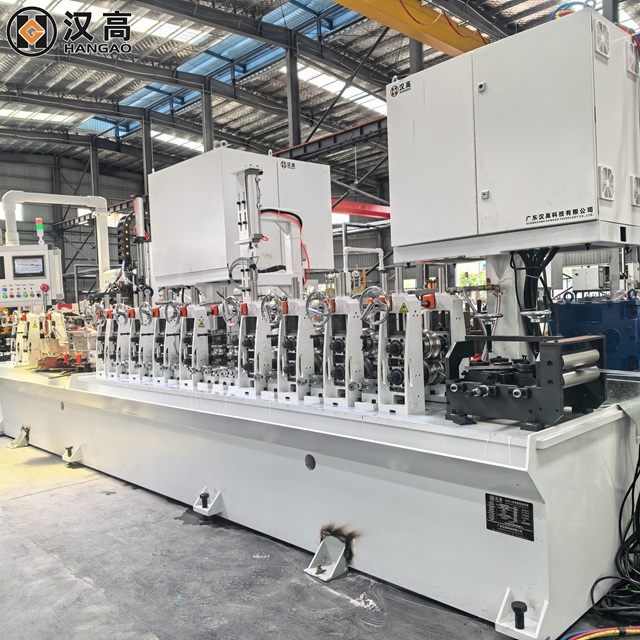
A properly configured Stainless Steel Tube Production Line For Food Industry should integrate forming, welding, sizing, annealing, and inspection rather than treating welding as an isolated process.
For applications requiring high weld consistency, Orbital Welding / TIG Welding technology is an effective choice. TIG welding provides controlled heat input and a clean weld profile, which is particularly important for sanitary tubing manufactured according to requirements such as ASTM A270 / 3A Standard.
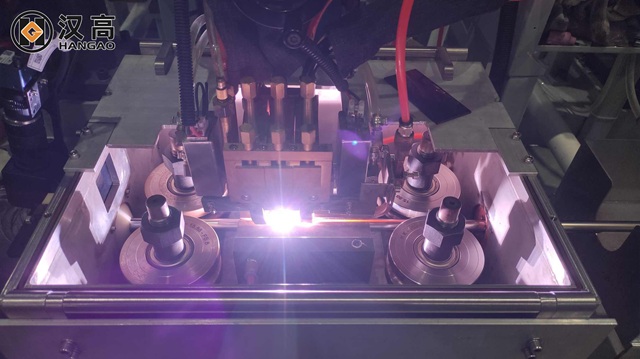
Hangao Technology's three-cathode TIG welding system is designed to improve welding stability and productivity. Its three torches work sequentially: the first helps clean oil and burrs from the strip edges, the second performs preheating, and the third concentrates the arc for deeper welding with lower current. According to Hangao, this configuration can increase welding speed and reduce common defects such as undercut and weld hysteresis.
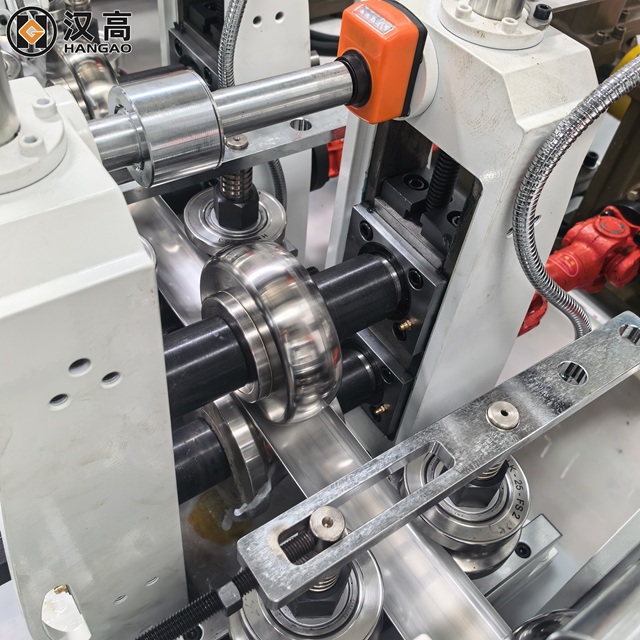
The system also combines a 3D welding torch adjustment mechanism, four-roll squeeze device, weld boot, electromagnetic control, and dedicated welding rollers. These components help control tube deformation before and after welding while maintaining dimensional stability.
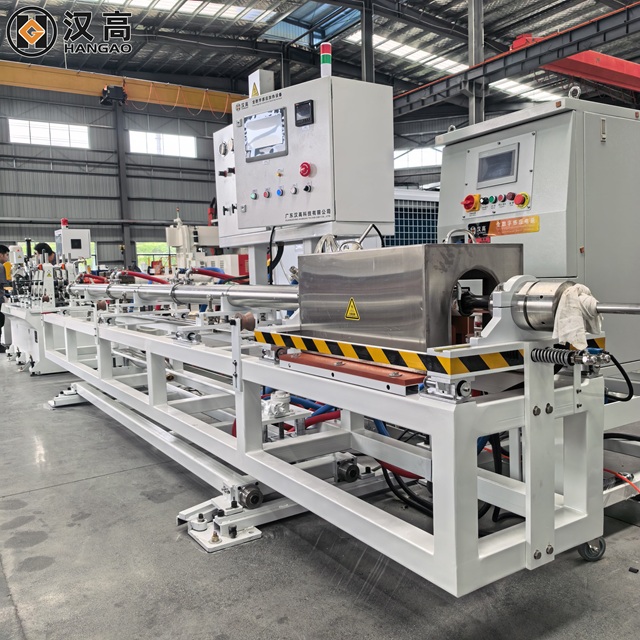
For food-grade applications, bright annealing is another important stage. Controlled heat treatment can homogenize the stainless-steel microstructure and relieve internal stress, supporting more stable tube performance. Hangao's listed system uses bright annealing equipment with DSP+IGBT technology.
3. Key Technical Parameters to Consider
When selecting a Food Grade 316L Stainless Steel Tube Making Machine, buyers should evaluate the complete production range rather than focusing only on maximum speed.
| Item | Typical Consideration |
| Tube Material | 304L, 316L and other stainless steels |
| Tube OD | Depending on product range and forming design |
| Wall Thickness | Based on tube application and welding capability |
| Welding | Multi-cathode TIG / TIG welding |
| Annealing | Bright annealing with controlled heating and cooling |
| Forming | Precision roll forming and sizing |
| Control | PLC-based intelligent production monitoring |
| Standards | ASTM A270 / 3A requirements where applicable |
Hangao's published three-cathode models cover tube outside diameters from 6–325mm, wall thicknesses from 0.4–10.0 mm, and production speeds of 1–15 m/min, depending on the model.
The company also states that its intelligent control system can visualize production parameters and trace welding current, power, and frequency for individual tubes. This type of process data is useful when manufacturers need repeatable quality across large production batches.
4. Customer Application: From Welding Stability to Sanitary Tubing
A typical food-processing tube manufacturer may begin with a requirement for 304L or 316L stainless steel tubing with strict weld quality and surface requirements. The production line must then balance forming accuracy, welding stability, annealing performance, and downstream finishing.
In this situation, a three-cathode configuration can provide an alternative to a conventional single-torch setup. The staged cleaning, preheating, and welding process helps create a more controlled welding environment, while the squeeze and sizing sections help maintain tube geometry.
Hangao reports that its equipment has been supplied to international markets including India, South Korea, Thailand, Vietnam, Dubai, and other regions. Its published company information also lists more than 20 years of welded-pipe equipment experience and more than 30 national patents.
For an overseas buyer, the more important consideration is whether the supplier can configure the complete line around the required tube grade, diameter, wall thickness, welding standard, surface finish, and production capacity—not simply provide a standalone tube mill.
5. FAQ
Q1: Is TIG welding suitable for sanitary stainless steel tubing?
Yes. TIG welding is commonly considered when clean, controlled welds are required. The actual process should be selected according to tube material, wall thickness, production speed, and applicable sanitary specifications.
Q2: Should I choose 304L or 316L?
304L is suitable for many general food-processing applications, while 316L provides higher corrosion resistance and is often preferred for more demanding environments. The final selection should be based on the medium, cleaning chemicals, temperature, and applicable standards.
Q3: Why is bright annealing important?
Bright annealing can relieve welding-related stresses and improve material uniformity. In sanitary tube production, it can also form part of the process used to achieve the required mechanical and surface properties.
Q4: What makes a three-cathode welding line different?
The three-cathode system divides the welding process into cleaning, preheating, and deep welding stages. Hangao combines this configuration with electromagnetic control to improve arc concentration and welding stability.
Q5: How should I select the right production line?
Start with the finished tube specifications: material grade, OD, wall thickness, tolerance, surface finish, applicable standard, and required output. Then select the forming, TIG welding, annealing, sizing, and inspection configuration accordingly.
For manufacturers targeting hygienic food-processing applications, the right Stainless Steel Tube Production Line For Food Industry is ultimately the one that delivers stable weld quality, repeatable dimensions, controlled heat treatment, and reliable long-term production—not simply the highest advertised speed.
