

For stainless steel tube manufacturers, an uneven weld bead is more than a cosmetic defect. Variations in bead width, penetration, reinforcement, or surface appearance can lead to additional grinding, rejection, leakage risks, and unstable downstream forming. When a tube mill runs continuously, even a small Weld bead inconsistency can become a significant production cost.
The good news is that most defects can be traced to a limited number of process variables. Understanding the relationship between forming accuracy, welding parameters, material condition, and cooling is the first step toward stable tube production.
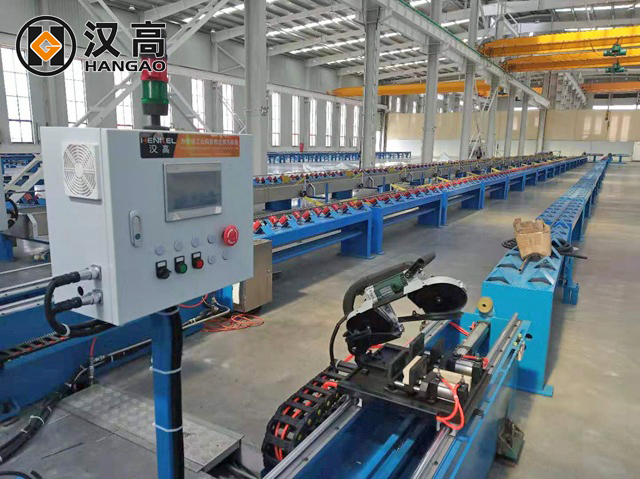
Pain Point: Why Do Weld Beads Become Uneven?
A common cause is unstable strip alignment before welding. If the strip edges are not consistently positioned, the welding torch must compensate for changing joint geometry. This can produce an irregular bead profile even when the welding current remains unchanged.
Heat input control is another critical factor. Excessive current or slow travel speed can create a wide, convex bead and excessive penetration. In contrast, insufficient heat or excessive speed may result in a narrow bead, incomplete fusion, or weak penetration. Travel speed variation is particularly noticeable when production speed changes without corresponding adjustment of welding parameters.
Shielding gas also deserves attention. Incorrect gas flow, poor nozzle positioning, air leakage, or contamination around the welding zone can cause oxidation and unstable arc behavior. For thin-wall stainless steel, Shielding gas optimization is especially important because small changes in thermal input can significantly affect the weld profile.
Mechanical factors should not be overlooked. Worn forming rolls, incorrect roll pressure, poor strip preparation, and accumulated forming errors can alter the edge gap before the welding point. In practice, an unstable bead is often the result of several small deviations rather than one major machine failure.
Solution: Build Stability Before Increasing Welding Power
The first step is to stabilize the strip-forming process. Check coil quality, edge condition, strip tension, roll alignment, and the weld-zone edge gap before changing welding current. A stable joint geometry gives the welding system a much easier job.
For a TIG welding tube mill, welding current, arc voltage, travel speed, electrode position, and shielding gas should be treated as one process package. Changing only one parameter may solve a short-term defect while creating another downstream.
Automatic weld tracking can further reduce operator-dependent variation. A tracking system continuously follows the weld position and helps maintain a consistent torch-to-joint relationship as the strip moves through the line.
For thin-wall products, manufacturers should also pay attention to cooling and post-weld treatment. Excessive localized heat can cause discoloration, deformation, or dimensional instability. If the product requires a bright or sanitary surface, subsequent annealing and surface treatment should be integrated into the production strategy rather than treated as separate corrective operations.
This approach is particularly relevant to orbital welding bead inconsistency in thin wall stainless tubes, where the tolerance for heat-input fluctuations is relatively small.
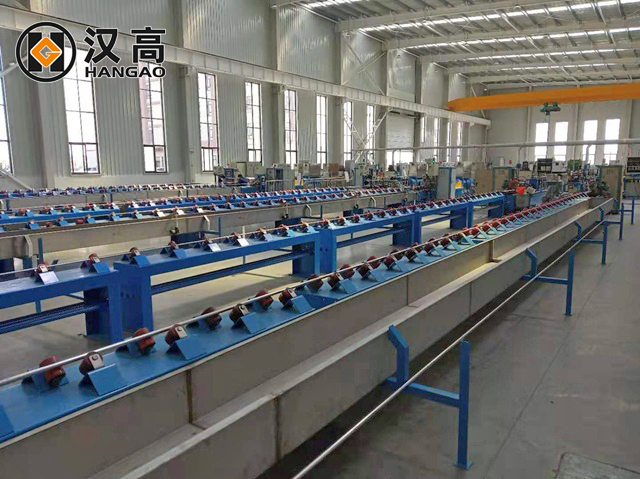
Technical Parameters to Check
When diagnosing uneven weld beads, production engineers should record several parameters rather than relying on visual inspection alone.
| Parameter | Typical concern | Production objective |
| Welding current | Bead too wide/narrow | Stable penetration |
| Travel speed | Bead width fluctuates | Constant line speed |
| Edge gap | Irregular fusion | Consistent joint geometry |
| Shielding gas | Oxidation/arc instability | Stable gas coverage |
| Torch position | Uneven bead profile | Accurate tracking |
| Strip tension | Tube deformation | Stable forming |
| Roll alignment | Changing edge position | Consistent weld center |
| Cooling | Heat distortion | Controlled thermal condition |
The exact values should always be determined according to stainless steel grade, tube diameter, wall thickness, welding process, and production speed. For equipment buyers, it is therefore more useful to evaluate a complete process solution than to compare welding power alone.
Hangao's stainless steel coil tube production line, for example, covers tube specifications from 6–325 mm outside diameter and 0.38–10 mm wall thickness, with PLC-based control. Its listed TIG configurations range from 6–16 mm to 168–325 mm OD depending on the machine model.
The line also uses segmented deformation forming and a rigid roll design to reduce accumulated forming errors. Hangao states that its W-forming technology can achieve a production yield above 97%, while the line is designed for production speeds of up to 15 m/min depending on configuration.
For manufacturers producing different coil geometries, the flexible structure can be adjusted for round, square, and U-shaped coils. Intelligent control also enables production parameters such as welding current, power, and frequency to be monitored and traced.
Customer Application: From Long Welded Tubes to Coil Tubing
A typical customer requirement is not simply to produce a welded stainless steel tube. The tube may need to be continuously formed, welded, sized, tested, and subsequently processed into a coil with stable dimensions and surface quality.
This is where line integration becomes important. Hangao positions its stainless steel coil production line for applications including fluid transportation, sanitary tubing, machinery, automotive components, appliances, and special-purpose tubes. The manufacturer also offers supporting equipment such as weld bead rollers, weld tracking systems, bright annealing equipment, and intelligent control systems.
For a tube producer, this integrated configuration can reduce the risk of solving the weld defect at one station only to discover a dimensional or surface problem later in the process. The objective is a stable production chain from strip forming to finished coil tubing.
FAQ
1. What is the most common cause of uneven weld beads?
Unstable edge alignment, inconsistent heat input, and variations in travel speed are among the most common causes. The forming section should be checked before adjusting welding parameters.
2. Can uneven weld beads be caused by the tube mill?
Yes. Incorrect roll alignment, excessive forming pressure, worn tooling, and unstable strip tension can change the edge gap and directly affect welding quality.
3. How can TIG welding bead consistency be improved?
Start with stable edge preparation and forming. Then optimize welding current, travel speed, electrode position, and shielding gas as a complete parameter set.
4. Is automatic weld tracking necessary?
It is not mandatory for every application, but it can significantly improve consistency when production speed is high or the strip position changes during continuous production.
5. What should buyers evaluate when selecting a stainless steel tube production line?
Do not evaluate only maximum speed or motor power. Check forming stability, welding control, tracking accuracy, applicable diameter and thickness ranges, automation, quality monitoring, after-sales support, and the manufacturer's ability to customize the line for your actual tube specifications.
For manufacturers facing recurring Uneven weld beads, the most effective solution is usually not a single welding adjustment. A stable tube mill combines accurate forming, controlled heat input, reliable tracking, optimized shielding, and consistent process monitoring. That combination is what turns weld quality from an operator-dependent result into a repeatable production standard.
