Are you struggling with inconsistent weld quality and rising production costs in your tube mill operation? Many manufacturers across India, the USA, and Southeast Asia face the same challenge when scaling their pipe production lines. A high precision TIG welded pipe making machine can be the decisive factor between mediocre output and market-leading product quality.
The Pain Points: What Pipe Manufacturers Actually Face
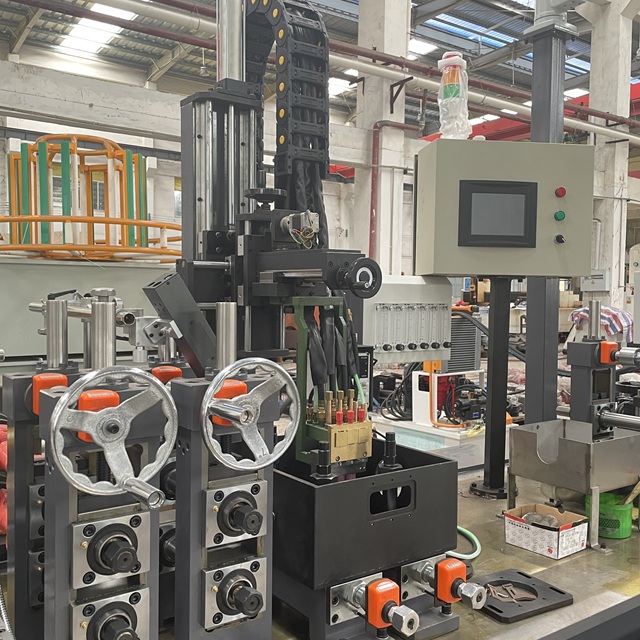
Poor weld penetration remains the number one complaint from factory floors in Mumbai, Houston, and Bangkok alike. Operators often report arc instability when switching between stainless steel grades. This leads to rejected batches and material waste.
Energy costs are squeezing margins harder than ever. In India, power fluctuations damage sensitive welding electronics. Southeast Asian humid climates corrode unprotected tube mill components. American buyers demand ASTM-compliant welds that manual systems simply cannot guarantee consistently.
Skilled TIG welders are scarce and expensive. Relying on manual arc welding for high-volume pipe production is no longer economically viable. You need automation. You need repeatability. You need a TIG welding pipe making machine built for your regional conditions.
The Solution: Why Automated TIG Tube Mill Systems Win
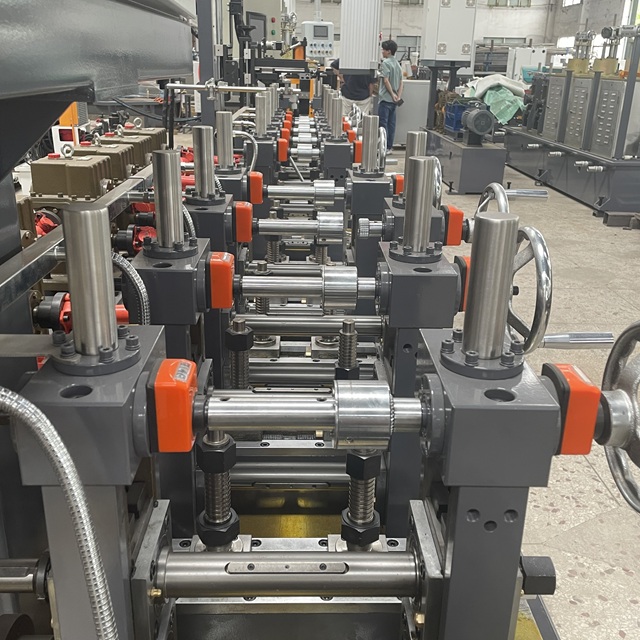
A modern TIG tube mill eliminates human variability from the welding equation. The machine maintains constant arc length, travel speed, and shielding gas flow across every meter of pipe produced. This is how you achieve zero-defect welding.
Our TIG welding pipe making machine integrates Three-gun TIG welding + electromagnetic welding arc control system for 304, 316L, and duplex stainless steels. This system can increase welding speed by 20%-40% or more. This feature is critical for Indian manufacturing environments where grid stability is unpredictable.
For Southeast Asian operations, the electrical cabinet carries IP54 protection and active dehumidification. Corrosion-related downtime drops by over 60% compared to standard arc welding setups. American clients benefit from full traceability reporting that satisfies ASME Section IX requirements.
Speed matters. A properly configured tube mill runs at 1-15 meters per minute depending on wall thickness. Manual TIG welding tops out at 2-3 meters per minute. The math on labor cost savings is undeniable.
| Parameter | Specification | Competitive Advantage |
|---|
| Pipe Diameter Range | Φ6mm – Φ325mm | Covers 90% of industrial and decorative applications | | Wall Thickness | 0.38mm – 6.0mm | High precision TIG welded pipe making machine capability for ultra-thin tubes | | Welding Speed | Up to 15m/min | 5x faster than manual arc welding | | Material Compatibility | 300 series austenitic steel, 400 series ferritic steel, duplex steel and titanium alloys | Multi-material flexibility without retooling | | Welding Method | DC TIG with Electromagnetic control arc ignition | Clean starts, no tungsten contamination | | Cooling System | Soft water circulation system | Essential for tropical Southeast Asian climates | | Control System | PLC with HMI touchscreen | Recipe storage for quick product changeover | | Power Requirement | 380V、410V and 415V | Multi-voltage design serves Indian and American installations |
|
FAQ: What Buyers Ask Before Investing
Q1: Is a TIG welding pipe making machine suitable for small batch production?
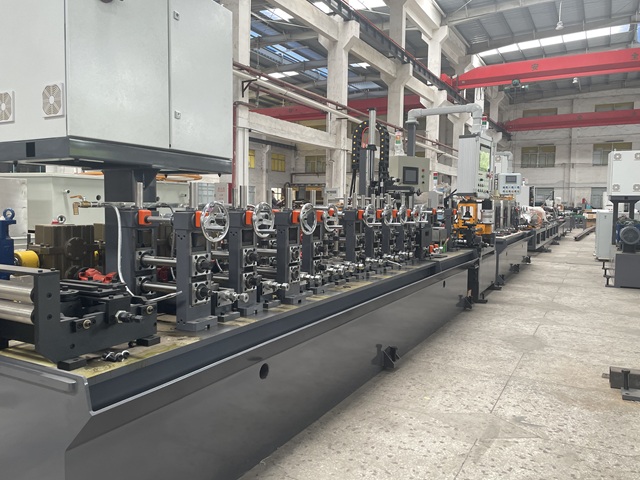
Yes. Modern PLC-controlled tube mills store up to 200 product recipes. Changeover between sizes requires only roll cassette swapping and HMI parameter recall. Batch sizes as small as 500 meters remain economically viable.
Q2: How does TIG compare to laser welding for thin-wall pipes?
Laser welding offers marginally higher speed for walls below 0.5mm. However, TIG arc welding delivers superior gap bridging and requires no edge preparation. For the 0.5mm-3.0mm range that dominates global pipe demand, TIG remains the cost-performance champion.
Q3: What after-sales support is available in India and Southeast Asia?
We give all our products a one-year quality warranty. The machine has a long life if you follow our advice on using it correctly.
Moreover, the replacement of spare parts is free of charge during the warranty period.And we offer lifetime technical support and other professional assistance.
Q4: Can the machine handle both industrial and sanitary-grade pipe standards?
Absolutely. The welding head configuration adjusts for internal bead grinding integration. Switching from structural pipe to 3A-compliant dairy tube requires only tooling and parameter changes on the same TIG tube mill platform.
Q5: What is the realistic ROI timeline?
Most clients achieve full payback within 12-18 months. Factors include local labor costs, material scrap savings, and energy efficiency. We provide a customized ROI projection based on your current arc welding production data.
Make the Switch to Automated Pipe Production
Manual TIG welding cannot compete with automated tube mill precision at scale. Whether you operate in India's growing infrastructure market, America's demanding energy sector, or Southeast Asia's export-driven manufacturing hubs, the right TIG welding pipe making machine transforms your output quality and profitability.
Contact our sales engineers today for a tailored tube mill configuration quote. We analyze your pipe specifications, production targets, and local operating conditions to recommend the optimal arc welding automation package.