

In modern pipe manufacturing, the biggest hidden cost often appears at the end of the production line. While extrusion,welding, cutting, and inspection processes have become highly automated, many facilities still rely on manual labor for the final packaging stage. This disconnect creates a significant bottleneck that undermines overall efficiency.
The Pain Points of Manual Packaging
When workers handle bundling, strapping, and bagging manually, several critical issues emerge. First, packaging speed rarely matches upstream production capacity, causing pipes to accumulate at the line's end. Second, inconsistent wrapping tension leads to product damage during transit—scratches on coated surfaces or deformation of precision tubes can result in costly returns. Third, rising labor costs and workforce shortages make manual operations increasingly unsustainable, especially for manufacturers running multiple shifts.
For steel pipe producers, these challenges are even more pronounced. Heavy-duty tubes require robust bundling and protective wrapping that human operators struggle to perform consistently. Without an integrated steel pipe packaging system, facilities often face delayed shipments and elevated scrap rates.
Solution: End-to-End Industrial Pipeline Automation
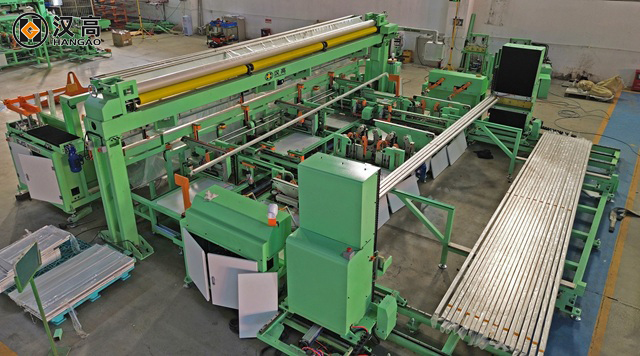
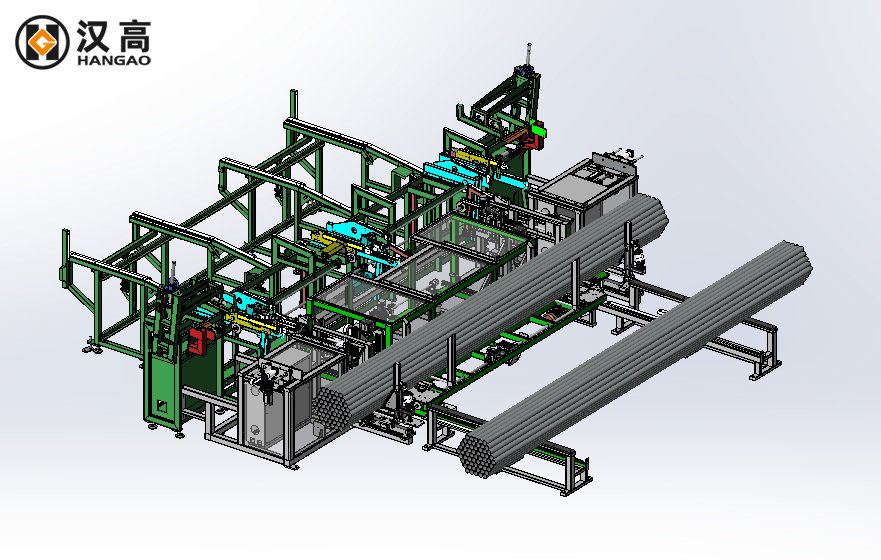
The fully automatic pipe packaging machine is an intelligent packaging equipment integrating automatic feeding, film coating, palletizing, strapping, and labeling functions. It typically connects to the end of the production line, automatically feeding pipes and completing packaging operations from single pipes to groups without manual intervention.
Its core functions include:
Automatic Feeding and Alignment: A conveyor system smoothly transports pipes to the packaging station and automatically adjusts their position to ensure neat arrangement.
Intelligent Strapping: Utilizing a high-performance automatic pipe strapping module, it adaptively applies strapping force based on the pipe diameter and quantity, ensuring a secure fit without damaging the pipe body.
Film Wrapping: Combined with an automatic wrapping system, it achieves all-around, uniform film wrapping, providing dustproof, moisture-proof, and scratch-proof protection.
Automatic Labeling: It can integrate coding and labeling equipment to automatically print and affix product information, specifications, barcodes, etc.
Data Connection and Monitoring: Supports integration with MES/ERP systems, recording packaging data in real time for production traceability.
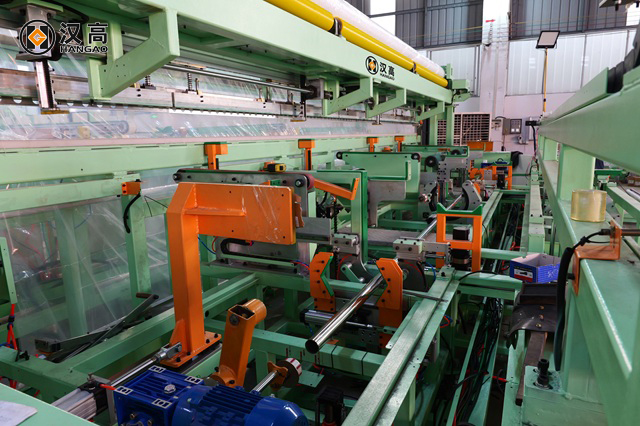
These systems typically integrate multiple functions, such as automated feeding, alignment, bundling, film wrapping, and automatic labeling, into a single coordinated process. By replacing scattered manual workstations with a unified industrial pipeline automation system, manufacturers can reduce end-of-line personnel by up to 60% while achieving throughput commensurate with extrusion or welding speeds.
For factories currently using stand-alone equipment, upgrading to highly efficient, fully automated pipeline packaging machines can eliminate inter-process connections. This ultimately results in a seamless flow from raw materials to palletized products, minimizing work-in-process inventory buildup on the factory floor.
Key Technical Specifications
When evaluating equipment suitable for your plant, focus on specifications that directly impact product range and throughput:
| Functions | Typical range |
| Pipe diameter | 16 mm – 259 mm (customizable) |
| Packaging speed | 15 – 40 bundles per hour (size varies) |
| Bundling force | Adjustable, maximum bundle weight up to 2T |
| Packaging materials | PE film, woven bags, or paper |
| Control system | PLC with HMI touchscreen |
| Power supply | 380V / 50Hz (adaptable) |
Modern units feature servo-driven alignment systems that ensure uniform bundle geometry, critical for stable stacking and container loading. Additionally, an advanced automatic pipe strapping machine component within the line applies consistent tension without crushing thin-walled or coated products.
For manufacturers requiring individual protection, an integrated pipe bagging machine can sleeve single pipes before bundling, offering superior moisture and scratch resistance compared to manual bagging methods.
Real-World Application: A Steel Pipe Manufacturer's Transformation
A mid-sized steel pipe producer in Southeast Asia recently illustrates the impact clearly. Operating three production lines, the facility employed twelve workers across two shifts solely for counting, bundling, and wrapping operations. Packaging inconsistencies led to frequent customer complaints about surface rust and handling damage.
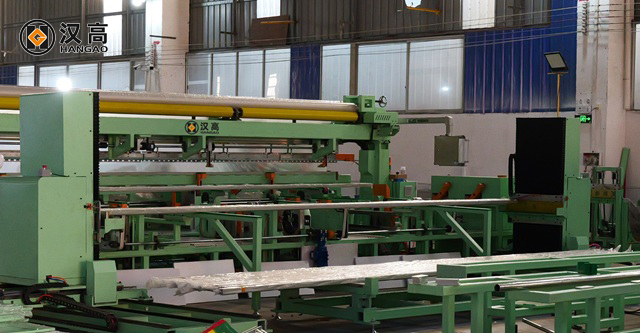
After implementing a complete pipe packaging production line equipped with automated feeding and alignment, track-type winding, and robotic strapping, the company achieved significant results within six months. Strapping preparation time was reduced by 65%, labor reconfiguration saved approximately $180,000 annually, and customer-reported packaging defect rates were reduced to near zero. The system can now quickly change recipes via a human-machine interface (HMI) to handle round, square, and rectangular tubes, fully demonstrating the flexibility that highly efficient, fully automated pipe packaging machines bring to a diverse product portfolio.
Frequently Asked Questions
Q: Can a fully automatic pipe packaging machine handle different pipe materials and shapes?
Yes. Modern systems accommodate PVC, HDPE, steel, and stainless-steel products. Through servo-adjustable guides and programmable parameter sets, the same line processes round, square, and rectangular profiles with minimal changeover time.
Q: How does this equipment integrate with existing production lines?
Integration typically occurs via conveyor interfaces and PLC communication protocols. Most manufacturers provide modular designs, allowing you to connect the packaging unit to your current stacking or inspection station without rebuilding the entire layout.
Q: What maintenance requirements should we expect?
Daily maintenance is minimal—primarily film or strap replenishment and basic cleaning. Preventive maintenance focuses on servo motors, pneumatic components, and cutting blades, usually requiring attention on a quarterly basis depending on operating hours.
Q: Is a pipe bagging machine necessary, or can we use wrapping only?
The choice depends on your product and shipping method. Bare steel pipes destined for long-distance transport typically benefit from individual bagging before bundling. For local delivery of coated or corrosion-resistant products, orbital wrapping alone often suffices.
Manual packaging is no longer a viable finishing stage for competitive pipe manufacturers. By deploying a fully automatic pipe packaging machine as the capstone of your operation, you unlock the true capacity of your upstream equipment, protect product quality, and reallocate labor to higher-value tasks. Whether you need a complete steel pipe packaging system or targeted upgrades to specific stations, end-to-end automation transforms your end-of-line from a constraint into a competitive advantage.
