

1.Overview of the Mechanical Properties of Industrial Welded Pipes
1.1 What Are Mechanical Properties and Their Importance in Industry?
Mechanical properties refer to the mechanical behaviors exhibited by a material when subjected to external forces.
They serve as the fundamental basis for determining whether industrial welded pipes can meet engineering design
requirements and ensure the safe and reliable service of structural systems. In the industrial sector,
a comprehensive evaluation of the mechanical properties of welded pipes is a prerequisite for guaranteeing
the safety, stability, and longevity of critical infrastructure—such as oil and natural gas transmission pipelines,
structural supports in buildings, and fluid piping systems. Consequently, the processes of design, material selection,
and quality acceptance are all centered around data regarding these mechanical properties.
1.2 A Comparative Analysis of the Performance Differences Between
Industrial Welded Pipes and Seamless Pipes
The primary difference between industrial welded pipes and seamless pipes lies in their manufacturing processes;
this distinction directly leads to differences in their performance distribution, economic viability, and applicable fields.
Performance Uniformity: Seamless pipes exhibit uniform mechanical properties across their entire cross-section,
free from any structural discontinuities associated with welds. Welded pipes, conversely, present microstructural and
property variations among the base metal, the heat-affected zone (HAZ), and the weld seam itself;
the "weakest link" in their overall performance often resides in the quality of the weld.
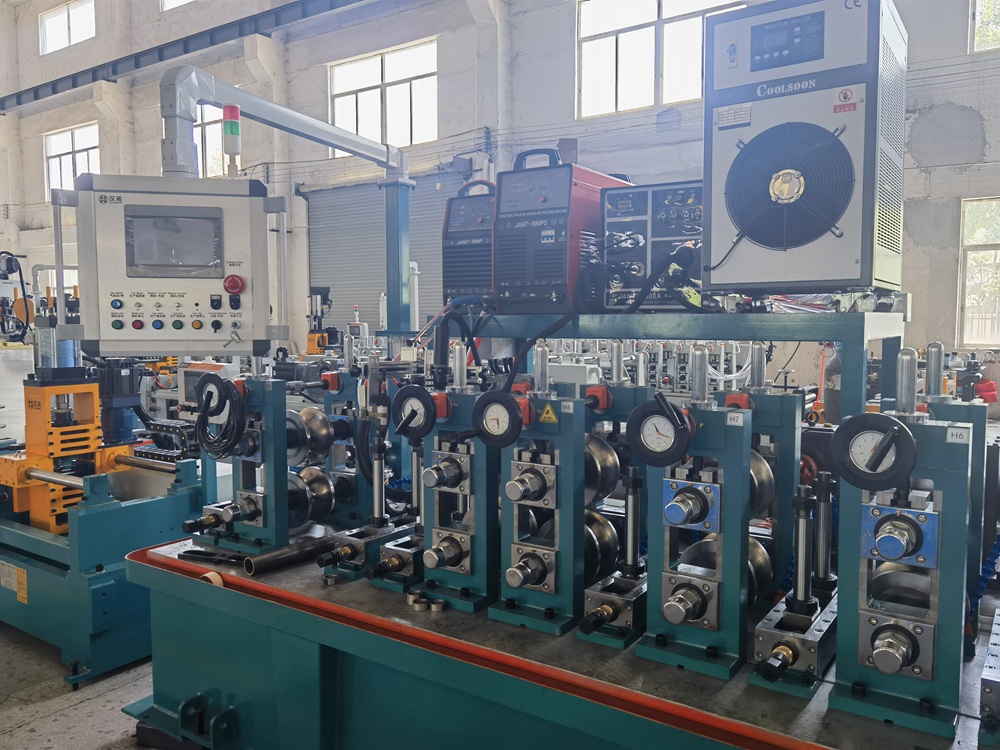
Strength and Pressure Resistance: Modern, advanced welding techniques (such as dual-ring laser welding,
plasma welding, and TIG welding) enable the weld seam to achieve—or even exceed—the performance levels of
the base metal, thereby rendering the welded pipe's pressure-bearing capacity comparable to that of a seamless pipe
of the same grade. Nevertheless, seamless pipes theoretically retain a distinct advantage when subjected to extremely
high circumferential stresses or complex, multi-directional stress loads.
Economics and Dimensions: Welded pipes boast high production efficiency and lower manufacturing costs, and
they can be readily produced in large diameters with thin walls, making them the primary choice for long-distance
transmission pipelines. Seamless pipes, on the other hand, hold a comparative advantage in the production of
thick-walled, small-diameter tubing and specialized alloy pipes.
Application Focus: Industrial welded pipes are widely utilized in major oil and gas pipelines, aerospace applications,
fluid conveyance systems, heat exchangers, nuclear power facilities, and similar sectors. Seamless pipes, conversely,
are predominantly employed in applications where requirements for material uniformity are
exceptionally stringent—such as in high-pressure boilers, hydraulic cylinders, and high-precision mechanical structures.
2. Analysis of Core Strength Indicators
2.1 Tensile Strength: A Measure of Load-Bearing Limits
Tensile strength is the maximum nominal stress a material can withstand before fracture during a uniaxial tensile test; it serves as the ultimate indicator of a material's capacity to resist maximum uniform plastic deformation and fracture. In design applications, tensile strength determines the ultimate load-bearing potential of structural components and serves as the definitive boundary criterion for safety assessments.
2.2 Yield Strength: The Critical Point of Permanent Deformation
Yield strength is the stress value at which a material begins to undergo significant plastic deformation. For steels exhibiting a distinct yield plateau, the lower yield strength is typically adopted. In engineering design, yield strength serves as the direct basis for calculating allowable stress, ensuring that structural components operate within their elastic range and avoiding the occurrence of irreversible deformation.
2.3 Yield Ratio: A Key Reference for Safety Margins
The yield ratio is the ratio of yield strength to tensile strength. It constitutes a critical safety indicator:
Low Yield Ratio: The process of plastic deformation from yielding to fracture is relatively prolonged,
providing a substantial safety margin; however, this implies a lower utilization efficiency of the material's
inherent strength.
High Yield Ratio: Once the material yields, it rapidly approaches its fracture limit; this indicates insufficient
plastic reserve and renders the material susceptible to brittle fracture. Modern high-performance pipeline steels,
while striving for high strength, utilize microalloying and controlled rolling/controlled cooling processes to
maintain the yield ratio within a reasonable range, thereby balancing strength with safety.
3. Primary Factors Influencing Mechanical Properties
3.1 Chemical Composition
Carbon: The core element for enhancing strength, though it tends to reduce plasticity, toughness, and weldability.
Manganese: A solid-solution strengthening element that improves both strength and toughness, while also
enhancing hot workability.
Silicon: Contributes to solid-solution strengthening and increased strength; however, excessive amounts can
compromise toughness and weldability.
Sulfur and Phosphorus: Deleterious elements that increase susceptibility to hot shortness and cold shortness;
their content must be strictly controlled.
Microalloying Elements: Such as niobium, vanadium, and titanium; these elements significantly enhance strength
—without substantially compromising plasticity or toughness—through mechanisms such as grain refinement
and precipitation strengthening.
3.2 Welding Processes
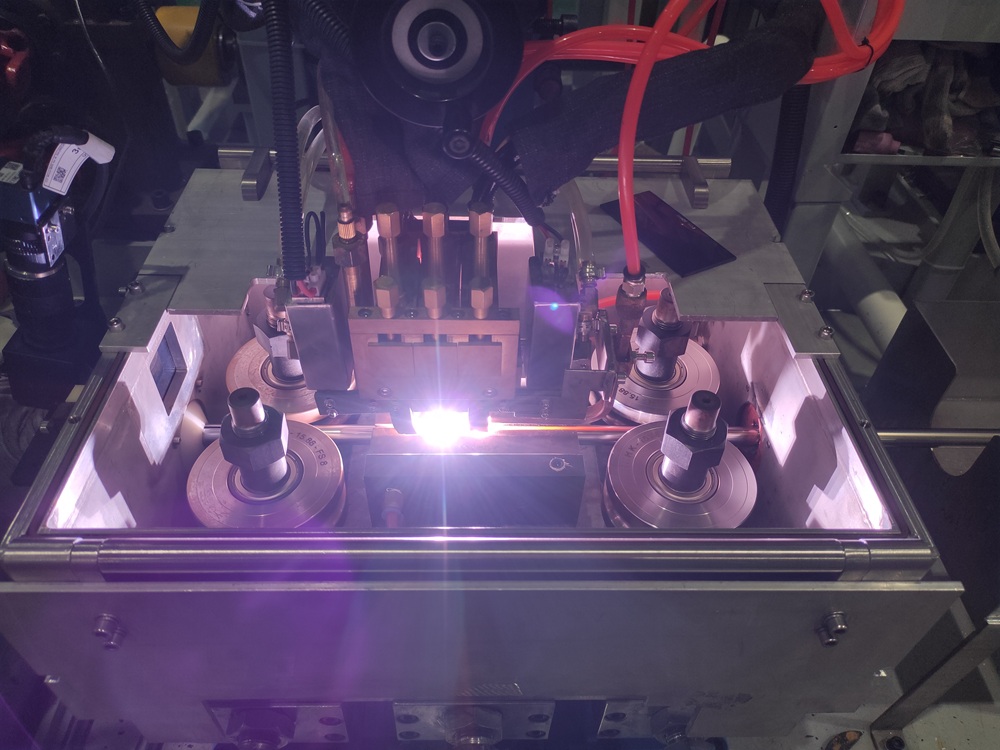
Dual-Beam Laser Welding: Characterized by high efficiency and a narrow heat-affected zone (HAZ); widely employed in the production of straight-seam welded pipes.
Plasma Welding: Offers deep penetration, high and consistent weld quality, and high production efficiency; suitable for medium-to-thick plates and large-diameter longitudinal seams.
TIG Welding: Produces clean welds with excellent bead appearance; used for precision thin-walled welded pipes made of stainless steel, alloy steel, and similar materials.
3.3 Heat Treatment Processes
Annealing: Eliminates internal stresses, reduces hardness, enhances plasticity, improves machinability, refines grain structure, homogenizes the microstructure, and improves overall mechanical properties—particularly toughness.
4.Summary: How to Select the Appropriate Welded Pipe Based on Engineering Requirements
Selecting industrial welded pipes is a systematic undertaking that requires multi-dimensional matching:
Clarify Service Conditions: First, determine the pipe's intended use (pressure-bearing, structural, or conveyance), the conveyed medium (including corrosiveness), operating pressure/load, operating temperature (ambient or cryogenic), and the installation environment (indoor, outdoor, or buried).
Determine Core Performance Grades:
Establish the strength grade by using yield strength as the primary design basis.
Verify tensile strength to ensure an adequate safety margin.
Determine the acceptable range for elongation and the yield-to-tensile ratio based on forming
requirements (e.g., cold bending) and safety criteria.
Evaluate Environmental and Dynamic Requirements: For environments involving low temperatures,
impact loads, or alternating loads, specific impact toughness parameters and corresponding test
temperatures must be specified.
Consider Corrosion Resistance Requirements: In corrosive environments, prioritize the use of stainless steel
(e.g., 304/316L) or weathering steel, or explicitly specify requirements for anti-corrosion coatings.
Focus on Processing and Acceptance Criteria: Based on application requirements, clearly define
the welding process, straightening process, and heat treatment process, as well as mandatory process
performance tests (such as flattening, flaring, and hydrostatic testing) and non-destructive testing standards.
Adhere to Standards and Specifications: Strictly follow national (GB) and international (API, ASTM, EN, ISO)
standards throughout the procurement, manufacturing, and acceptance stages to ensure the authority and
comparability of all technical data.
Ultimately, the selection of industrial welded pipes represents a comprehensive balance between
performance, manufacturing processes, cost, and regulatory compliance. By precisely matching
performance specifications—while ensuring that safety and service life requirements are fully met—
engineering projects can achieve optimal levels of both economic efficiency and reliability.
