

In modern industrial production, the efficiency of pipe and tubing packaging directly impacts a company's production costs and logistics efficiency. Traditional manual packaging methods are not only time-consuming and labor-intensive, but also difficult to guarantee quality, severely restricting production pace. Faced with this challenge, fully automatic pipe packaging machines have emerged, becoming a revolutionary tool in the packaging industry with their high efficiency, precision, and intelligence.
I. Pain Points of Traditional Pipe Packaging
1.1 Low Efficiency of Manual Packaging
Pipe products are typically long and heavy, requiring multiple workers to work together in traditional manual packaging. For example, manually packing a single 6-meter stainless steel pipe takes several minutes, and the high labor intensity makes it difficult to maintain high efficiency consistently.
1.2 Inconsistent Packaging Quality
Manual packaging is greatly affected by the operator's skill level. The tightness of the packaging film, the binding position, and the sealing quality are difficult to standardize. This not only affects the product's appearance but may also lead to pipe damage during transportation due to loose packaging.
1.3 Significant Material Waste
Manual packaging makes it difficult to accurately control the amount of packaging materials used, resulting in unstable film overlap rates and improper use of strapping, leading to considerable material cost waste over time.
1.4 Prominent Safety Hazards
Manual handling and packaging of heavy pipes poses significant safety risks, with frequent worker back injuries and crushing accidents, placing additional safety management pressure on enterprises.
II. What is a Fully Automatic Pipe Packaging Machine?
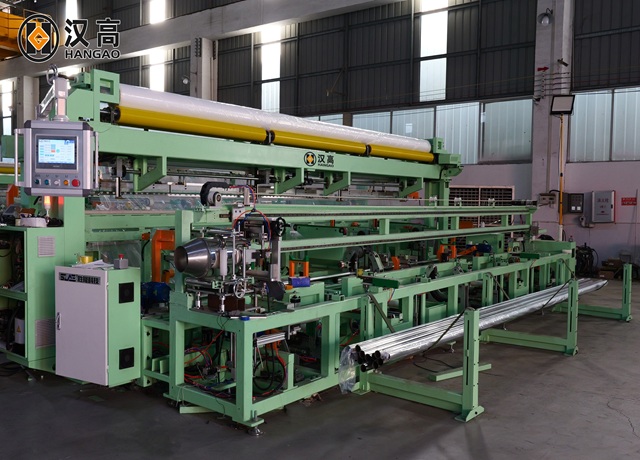
A fully automatic pipe packaging machine is an intelligent packaging equipment integrating automatic feeding, film covering, palletizing, strapping, and labeling functions. It typically connects to the end of the production line, automatically feeding and completing packaging operations from single pipes to groups without manual intervention.
Its core functions include:
2.1 Automatic Feeding and Alignment
The conveyor smoothly transports the pipes to the packaging station and automatically adjusts their position to ensure neat arrangement.
2.2 Intelligent Strapping
Utilizing a high-performance automatic pipe strapping module, it adaptively applies strapping force based on the pipe diameter and quantity, ensuring a secure fit without damaging the pipe body.
2.3 Film Wrapping
Works with an automatic wrapping system to achieve all-around, uniform film wrapping, providing dustproof, moisture-proof, and scratch-proof protection.
2.4 Automatic Labeling
Can be integrated with coding and labeling equipment to automatically print and affix product information, specifications, barcodes, etc.
2.5 Data Connection and Monitoring
Supports integration with MES/ERP systems, recording packaging data in real time for production traceability.
III. Components of a One-Stop Pipe Packaging Solution
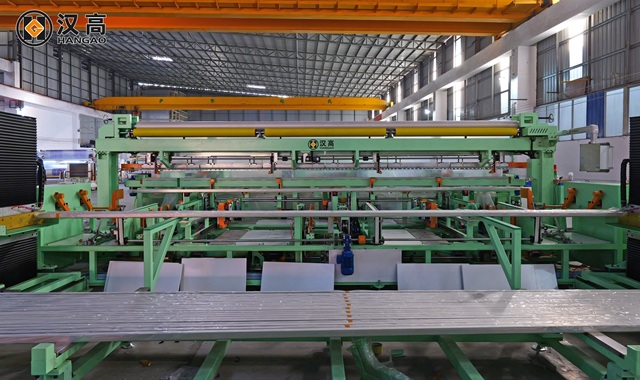
Modern pipe packaging is no longer a concept of a single piece of equipment, but a comprehensive pipe packaging line solution encompassing multiple stages.
3.1 Automatic Packaging Machine
The packaging machine automatically feeds and applies film. High-end models are equipped with universal film, saving materials and improving efficiency.
3.2 Automatic Sealing Unit
For pipe products requiring dust and moisture protection, the packaging line can be equipped with an automatic sealing device. The pipe is automatically sealed via heat sealing, requiring no manual intervention throughout the process.
3.3 Automated Palletizing and Conveying System
Packaged pipes are automatically transported to the palletizing station via a conveyor line. The palletizer neatly stacks the pipes according to a set pattern, preparing them for subsequent warehousing and transportation.
3.4 Automatic Pipe Strapping Machine
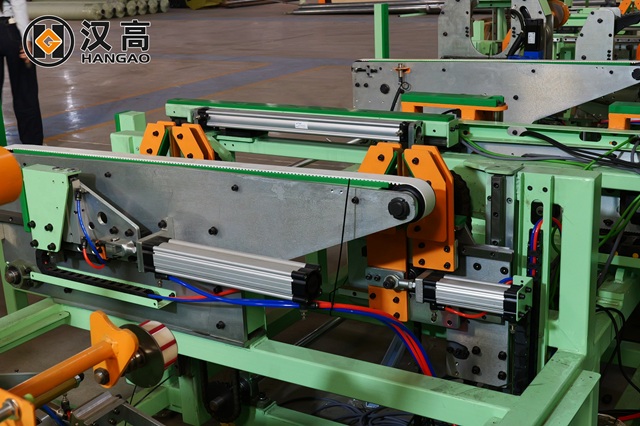
The automatic pipe strapping machine is one of the core units of the packaging line, responsible for strapping multiple pipes into a set quantity. This equipment uses a heat-sealing method with adjustable strapping force, adaptable to different materials such as PP and PET straps. Intelligent counting ensures accurate quantity per bundle, avoiding over- or under-packing.
IV. How to Choose a Suitable Fully Automatic Pipe Packaging Machine
Faced with numerous equipment options on the market, companies should evaluate them based on their own specific circumstances, considering the following dimensions:
4.1 Pipe Specification Compatibility
Different companies use pipes with varying diameters and lengths, requiring the selection of equipment with a wide adjustable range. A high-quality fully automatic pipe packaging machine should be able to handle various pipes with diameters from 20mm to 300mm and lengths from 3 meters to 12 meters, and offer convenient changeover adjustments.
4.2 Packaging Flexibility
Depending on product characteristics and customer needs, packaging formats may include single-piece independent packaging, multi-piece bundle packaging, and end-face closed packaging. The equipment should have the ability to quickly switch between various packaging programs.
4.3 System Integration Capability
Modern pipe packaging lines need to seamlessly integrate with upstream extrusion production lines and downstream warehousing systems. The equipment should support standard communication protocols to facilitate integration with the factory's MES or ERP systems, enabling data interconnection.
4.4 After-Sales Service Guarantee
Packaging equipment is a critical node on the production line; downtime due to malfunctions will directly impact overall production capacity. Choosing a supplier with a comprehensive service system and timely spare parts supply is crucial.
V. Future Outlook: Intelligentization and Greening
With the deepening of Industry 4.0, future fully automated pipe packaging machines will be more intelligent. By integrating machine vision, AI algorithms, and IoT technologies, the equipment can achieve more accurate defect detection, predictive maintenance, and dynamic optimization of packaging parameters. Simultaneously, the concept of sustainable development is driving the evolution of packaging towards greener practices, such as using recyclable or biodegradable strapping and stretch film, further reducing the environmental footprint.
In conclusion, against the backdrop of manufacturing transformation and upgrading, fully automated pipe packaging machines are no longer optional auxiliary equipment, but rather strategic equipment for enhancing enterprises' core competitiveness. By building complete pipe packaging lines and integrating key equipment such as automatic pipe strapping machines, enterprises can achieve an efficiency revolution in the packaging process, laying a solid foundation for high-quality development. Saying goodbye to inefficient packaging and embracing intelligent manufacturing will be an inevitable choice for every pipe manufacturing company facing the future.
