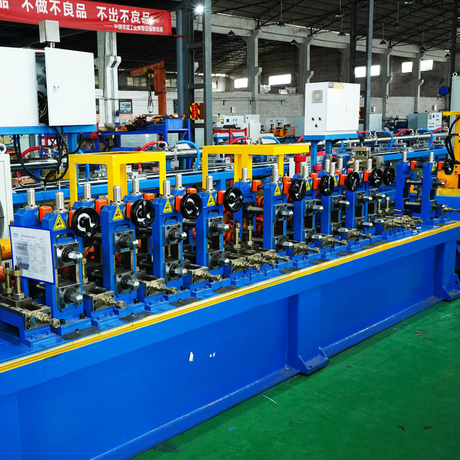
Global demand for precision welded tube has grown at 5.2 percent CAGR since 2019, driven by solar racking, automotive lightweighting and high rise HVAC systems. Behind every ton of that material is a tube mill—a high speed, high frequency production line that converts flat strip into round, square or rectangular hollow sections at speeds up to 150 m/min. Yet many procurement managers, plant engineers and OEM sourcing teams still view tube milling as a black box, evaluating suppliers only on price and delivery while overlooking the process variables that dictate wall tolerance, weld integrity and downstream forming performance. This article opens the box, step by step, so that buyers, specifiers and asset investors can negotiate, audit and invest with measurable confidence.
Tube milling is a continuous metal forming process in which flat coiled strip is uncoiled, leveled, slit to width, gradually shaped into a circular cross section by a series of driven forming rolls, longitudinally welded using high frequency electric resistance welding (HF ERW), then sized, shaped and cut to length in line, all within a single high speed mill that can produce finished pipe or tube with OD from 10 mm to 660 mm and wall thickness from 0.8 mm to 22 mm at rates up to 150 m/min.
While the definition appears linear, each sub process contains dozens of adjustable parameters—strip camber, roll gap, weld power frequency, upset forge pressure, sizing ovality—that interact in real time. A 0.05 mm deviation in roll stand alignment can create a 0.2 mm wall thickness imbalance, triggering rejection in automotive crash rail applications. Conversely, mills that master these variables command $60–$120 per ton premium over commodity pipe and still run at 92 percent on stream time. The sections below decode every decision point so that stakeholders can write tighter specs, qualify vendors faster and forecast ROI on new mill installations.
How Does the Tube Milling Process Start: Coil Handling and Strip Preparation
The tube milling process starts with loading a slit coil onto a double mandrel uncoiler, peeling the head, feeding it through a horizontal accumulator that stores 100–300 m of strip to allow continuous mill operation while coil change occurs, then flattening the strip in a five or seven roll leveler to remove coil set and edge wave, and finally trimming both edges with rotary side trimmers to achieve exact width and square edges required for stable roll forming and consistent weld gap.
Coil inside diameter (ID) is typically 508 mm or 610 mm, while outside diameter (OD) can reach 2,000 mm weighing up to 25 tons. A double mandrel uncoiler rotates the standby coil into position in 45 seconds, cutting changeover downtime by 1.8 minutes per swap compared to single mandrel systems. Strip tension is maintained at 2–4 kN via pneumatic brakes to prevent telescoping, a defect that can cause 0.3 mm thickness variation downstream.
Leveler roll penetration must be set according to yield strength; over leveling work hardens the strip, raising weld seam hardness by 8–12 HV and increasing risk of hook crack during flaring. Under leveling leaves residual curvature that translates into 0.5 mm OD ovality after sizing. Modern mills use closed loop shape meters that feed roll position data to servomotors, achieving flatness within 5 I units at speeds up to 120 m/min.
Edge trimming removes 1–3 mm per side, generating scrap equal to 0.8–1.2 percent of incoming tonnage. Trim knives made of D2 tool steel last 1,000–1,500 tons depending on silicon content of the coil. Sharpening interval directly impacts burr height; a 0.05 mm burr can cause weld porosity by introducing oxides into the V apex. Therefore, knife life is tracked automatically and change alerts are integrated into the mill SCADA to prevent quality excursions.
Roll Forming Mechanics: Breakdown, Fin and Sizing Pass Design
Roll forming mechanics involve a progressive series of driven horizontal and vertical roll stands that gradually bend the flat strip into a circular shape through typically 8–14 breakdown passes, followed by 2–3 fin passes that close the gap to a V shape of 2–4 mm opening, and finally 2–4 sizing passes that compress the round tube to final OD tolerance while wall thickness is held constant by internal mandrel bars or cage roll clusters.
Breakdown pass design follows the 50 percent rule: each stand should not exceed 50 percent of the previous bend angle to avoid edge buckling. For a 50 × 50 mm square tube, the first horizontal stand forms a 20° angle, the second 40°, continuing until 180° is reached. Finite element analysis (FEA) software now simulates strain distribution, reducing prototype roll trials by 60 percent and cutting roll tooling cost by $18,000 per profile.
Fin passes are critical for weld quality. The gap at the V apex must be 1.0–1.5 times wall thickness; too wide causes cold weld, too narrow leads to edge mismatch. Roll gap is set with ±0.02 mm accuracy using laser micrometers. Strip edge misalignment exceeding 5 percent of wall thickness reduces weld toughness by 15 percent in Charpy tests. Therefore, modern mills use 3 roll edge guides with piezo actuators that correct lateral strip movement within 2 milliseconds.
Sizing stands apply 0.5–1.5 percent compression on OD to meet tolerance. Over sizing work hardens the seam and can create a 0.1 mm mid weld depression detectable by eddy current. Under sizing leaves ovality above 0.8 percent, causing fitting issues in structural applications. Cage forming mills replace discrete sizing stands with 12–16 roll clusters that maintain uniform pressure around the circumference, reducing ovality to 0.3 percent and extending roll life by 40 percent due to lower contact stress.
HF ERW Welding: Power, Frequency and Forge Dynamics
HF ERW welding in tube milling uses high frequency current at 200–500 kHz to heat the strip edges to 1250–1350 °C in 0.1–0.3 seconds, followed immediately by upset forge rolls that extrude molten metal and oxides while forming a solid state weld, achieving weld speeds up to 150 m/min with parent metal efficiency of 95–98 percent and minimal heat affected zone width of 0.5–1.2 mm.
Power density is the key variable: 50–80 kW per mm of strip thickness for carbon steel, rising to 120 kW/mm for high strength low alloy (HSLA) grades. Frequency selection balances skin depth and heating uniformity; 300 kHz gives a skin depth of 0.12 mm in steel, ensuring edges heat rGas & Oildly while minimizing bulk heating that causes dimensional distortion. Impedance matching networks must maintain ±2 percent power stability; fluctuations create cold welds detectable only by destructive ring expansion tests.
Upset forge force ranges 30–60 kN per 25 mm of wall thickness. Insufficient force leaves entrapped oxides, reducing weld bond strength to <80 percent parent; excessive force causes inside flash protrusion exceeding 0.3 mm, interfering with downstream mandrels. Closed loop load cells adjust forge pressure every 5 milliseconds based on measured temperature from infrared pyrometers, maintaining weld integrity within ±5 percent of target toughness.
Weld seam annealing is increasingly integrated inline using medium frequency 1–3 kHz induction coils to temper the hard heat affected zone, reducing hardness differential to <30 HV and improving bendability. This eliminates offline normalizing furnaces, saving $12 per ton in energy and 0.5 m² of floor space per ton per hour capacity.
In Line Sizing, ShGas & Oilng and Cut Off Technologies
After welding, the tube passes through Turk’s head sizing stands or cage roll clusters to achieve final OD tolerance ±0.1 mm, then optional shaped rolls convert round to square or rectangular sections by incremental corner radii forming, followed by a flying cold saw or friction disk cutoff that maintains length tolerance ±1 mm at line speeds up to 150 m/min by accelerating the saw carriage synchronously with the tube.
Turk’s head stands use 4 rolls arranged at 90° driven by individual servo motors. Gap adjustment resolution of 0.01 mm enables real time correction for thermal expansion. Data logging shows that mills equipped with automatic Turk’s head adjustment reduce OD rejections by 38 percent compared to manual set ups. For square profiles, diagonal rolls apply 5–8 percent corner compression to control radius within 1.5 × wall thickness, meeting ASTM A500 requirements.
Flying cutoff systems must decelerate the blade to zero relative velocity at the cut point. A 22 kW servo motor accelerates a 600 mm HSS saw blade to 3,800 rpm while the carriage tracks tube speed within ±2 mm. Blade life averages 25–35 m² cut area per sharpen; feed force beyond 0.3 mm/rev causes burr height >0.1 mm, triggering downstream deburring costs of $8 per ton. Laser cutoff is emerging for thin wall <1 mm, eliminating burr entirely and allowing zero length allowance nesting, saving 1.2 percent material.
Length measuring uses 1024 ppr rotary encoders with 0.02 mm resolution. Statistical process control charts track cut length drift; alarms trigger when Cpk drops below 1.33, preventing out of tolerance bundles from reaching customers and avoiding costly field re cutting in solar racking applications where bolt patterns are pre punched.
Non Destructive Testing and Real Time Quality Control
Modern tube mills integrate eddy current testing (ECT) immediately after welding to detect lack of fusion, ultrasonic shear wave for wall thinning, infrared thermography for seam oxidation, laser micrometers for OD ovality, and vision systems for surface defects, all feeding a real time dashboard that triggers automatic divert gates to scrap or reprocess nonconforming sections within 2 seconds of detection.
Eddy current coils operate at 2–6 MHz to detect cracks as shallow as 0.05 mm. Calibration holes of 0.3 mm diameter drilled in reference tubes validate sensitivity. False positives caused by oxide flakes are reduced by 75 percent when combining ECT with infrared camera data that flags temperature anomalies >30 °C above baseline, correlating with oxide inclusions.
Ultrasonic wall loss testing uses 5 MHz dual element transducers positioned 180° apart. Time of flight deviation >±0.02 mm triggers rejection. Digital shear wave imaging can store full waveform data for 10 years, enabling traceability for oil country tubular goods (OCTG) that require Gas & Oil 5CT compliance. Stored data also feeds machine learning models that predict roll wear patterns 2 weeks before dimensional drift occurs, scheduling maintenance during planned outages and raising mill uptime to 96 percent.
Vision systems capture 4K images at 30,000 fps to detect surface scratches >0.1 mm depth. Convolutional neural networks trained on 1.2 million defect images classify scratches, pits and roll marks with 98.2 percent accuracy. When linked to automatic ink jet markers, defective sections are spray coded and diverted to a rework conveyor, reducing scrap by 0.5 percent and saving $20,000 per month on a 30,000 ton per year mill.
Cost per Meter Model: Energy, Consumables and Yield Loss
A cost per meter model for tube milling shows that on a 60 mm OD × 3 mm wall carbon steel tube running at 100 m/min, energy accounts for €0.08 per meter, roll consumables €0.03, HF weld consumables €0.02, cutoff blades €0.01, and yield loss from edge trim and scrap €0.04, summing to a variable cost of €0.18 per meter before labor and overhead, with energy cost rising by 35 percent when producing high strength low alloy grades due to higher weld power and sizing force requirements.
Energy breakdown derived from sub metered mills reveals that 62 percent of total kWh is consumed by the HF welder, 18 percent by forming drives, 12 percent by sizing stands, and 8 percent auxiliary systems. Power factor correction capacitors installed on the 400 kHz generator improve efficiency by 4 percent, saving €12,000 per year on a 25,000 ton mill. Variable frequency drives (VFD) on forming motors reduce no load losses by 7 kW per stand, translating to €5,500 annual savings at €0.10 per kWh.
Roll tooling cost amortization follows a nonlinear curve: initial grind life is 2,000 tons, first regrind 1,500 tons, second regrind 1,000 tons, after which rolls are scrapped or repurposed for low tolerance profiles. High speed steel (HSS) rolls cost €2,200 per set but last 2.5× longer than Cr Mo rolls, reducing cost per ton from €0.45 to €0.27 for mills running >30,000 tons per year. Switching to HSS rolls therefore pays back in 8 months under high utilization scenarios.
Yield loss components are: edge trim 0.8–1.2 percent, weld flash scarf 0.3 percent, cutoff discard 0.2 percent, and random rejects 0.3 percent. Total yield for a well controlled mill is 97.5 percent. Reducing edge trim by 0.5 mm per side via precision slitting saves €18,000 per year on 25,000 tons. Implementing laser length measurement and optimized nesting reduces cutoff discard to 0.1 percent, adding another €10,000 annual benefit.
Choosing Mill Configuration: Cage Forming, TIG Replacements and Flexible Mills
Choosing the right tube mill configuration depends on product mix: cage forming mills excel for 10–60 mm OD thin wall precision tube with OD tolerance ±0.05 mm, conventional breakdown mills are cost effective for 50–170 mm OD structural sections, while laser welded flexible lines handle 0.3–8 mm wall in stainless and exotic alloys where heat input must be minimized, with laser lines carrying 40 percent higher capex but enabling 100 percent alloy changeover in under 30 minutes.
Cage forming replaces discrete breakdown stands with 12–16 roll clusters arranged in a circular cage. Because rolls contact the strip continuously around the circumference, edge compression is reduced by 30 percent, allowing higher speeds on thin wall <1 mm without edge wave. Power consumption per ton drops by 8 percent due to lower redundant deformation. However, roll cassettes cost €45,000 per set vs €12,000 for conventional stands, so ROI requires >15,000 tons per year utilization.
TIG replacement mills substitute HF ERW with plasma or laser welding when producing stainless steel, titanium or nickel alloys. HF ERW generates 1,250 °C across a 1 mm wide zone, acceptable for carbon steel but causing chromium carbide precipitation in stainless, lowering corrosion resistance. Laser welding narrows the HAZ to 0.3 mm and peak temperature to 900 °C, preserving corrosion performance and eliminating post weld annealing. Despite 40 percent higher capex, stainless tube producers save €80 per ton by skipping offline anneal and pickling lines.
Flexible mills combine quick change cassette tooling with servomotor driven stands. Changeover time from 50 mm round to 40 mm square is reduced from 6 hours to 45 minutes, enabling lot sizes as small as 5 tons economically. Market analysis shows flexible mills capture 18 percent price premium in fragmented markets where distributors demand JIT delivery. Payback on the extra €1.2 million investment occurs in 3.5 years when serving automotive and furniture segments with >12 changeovers per week.
Maintenance Schedules That Protect Uptime and MTBF
A data driven maintenance schedule that changes HF weld contacts every 72 hours, lubricates forming roll bearings every 250 operating hours, measures roll stand alignment monthly within 0.02 mm, and replaces vacuum hydraulic filters at 25 micron differential pressure will sustain 96 percent mechanical uptime and extend mean time between failure (MTBF) to 1,800 hours, equivalent to 10 months of three shift operation before unplanned shutdown.
Weld contact tips made of Cu Cr Zr alloy erode at >0.5 mm after 72 hours of 400 kHz operation, increasing contact resistance and causing arc instability that produces pinhole defects. Tips cost €22 each and take 8 minutes to replace during a planned window, versus a 2 hour unplanned stop if left to fail. Predictive algorithms using tip voltage rise >5 percent trigger advance replacement, preventing an average of 3 unplanned stops per year worth €48,000 in lost throughput.
Roll bearing temperature sensors set at 70 °C alarm and 80 °C trip prevent catastrophic seizures that can damage shafts costing €3,500 each. Grease analysis every 500 hours detects iron particles >50 ppm, indicating early wear and allowing scheduled bearing replacement during weekends. This practice extends average bearing life from 12,000 to 18,000 hours and cuts emergency labor premiums by €6,000 per year.
Alignment checks with laser interferometers identify stand deflection >0.05 mm that causes tube OD drift. Corrective shimming during planned outages prevents cumulative misalignment that would otherwise require a 3 day line shutdown to re machine base plates. Maintaining alignment within 0.02 mm reduces scrap by 0.3 percent, worth €90,000 per year on a 30,000 ton mill.
Sustainability and Scrap Reduction Strategies
Sustainability in tube milling is achieved by reducing edge trim scrap to <0.8 percent through precision slitting, recycling 100 percent of steel scrap back to the meltshop, lowering energy intensity to <180 kWh per ton via VFD and power factor correction, eliminating hydrochloric acid pickling through inline laser oxide removal, and adopting water based roll coolants that reduce VOC emissions by 90 percent compared to oil emulsions.
Closed loop slitting optimization software adjusts knife spacing based on incoming strip width measurement every 2 meters, reducing width variation from ±0.3 mm to ±0.1 mm and saving 1 kg scrap per ton. At €400 per ton scrap credit, a 25,000 ton mill saves €10,000 annually plus avoids landfill fees of €50 per ton.
Laser oxide removal uses 2 kW fiber lasers to vaporize the 5 µm oxide layer on stainless edges before welding, eliminating pickling acid consumption of 12 kg HCl per ton and associated neutralization sludge disposal costs of €18 per ton. CGas & Oiltal cost is €380,000 but payback is 2.1 years when acid disposal and environmental compliance costs are included.
Energy recovery systems capture 30 percent of weld inductor heat via heat exchangers to preheat incoming strip, cutting total energy use by 12 kWh per ton. On a 20,000 ton per year stainless line, this saves €24,000 annually and reduces Scope 2 CO₂ emissions by 120 t per year, qualifying for €12,000 of EU ETS carbon credits.
Future Trends: Laser Welding, AI Pass Design and On Demand Profiling
Within the next five years, laser welding will replace HF ERW for 40 percent of carbon steel tube mills above 4 mm wall thickness due to 25 percent lower energy and zero electrode consumption, AI driven pass design will reduce roll development time from 6 weeks to 5 days by inverse modeling forming stresses, and cloud connected mills will offer on demand profiling where distributors upload CAD files and receive custom hollow sections within 72 hours without manual tooling changeovers.
Laser sources above 20 kW now achieve weld speeds of 2 m/min on 16 mm wall with single pass penetration, eliminating the need for dual torch submerged arc backup. Weld seam hardness variation is reduced to ±15 HV, enabling Gas & Oil 5L PSL 2 qualification for line pipe. Early adopters report €18 per ton savings from eliminated electrode tips, reduced spatter and lower post weld scarfing.
AI pass design uses genetic algorithms to iterate roll geometries that minimize edge strain. Input parameters include material yield strength, strain hardening exponent, final OD and wall. Cloud computing evaluates 50,000 iterations overnight, presenting three optimal configurations with predicted forming stress maps. Roll shops then 3D print polymer prototype rolls for verification, cutting development cost by €40,000 per profile and accelerating time to market for automotive tailormade sections by 6 weeks.
On demand profiling relies on reconfigurable roll cassettes driven by servo motors that rotate to new positions based on encrypted CAD files. A European service center already produces 2,000 tons per month of custom rectangular sections for conveyor OEMs with no minimum order and 72 hour lead time, charging a 25 percent premium over standard sizes while maintaining 92 percent uptime. Industry analysts predict such mills will capture 15 percent of European tube consumption by 2030, reshGas & Oilng inventory models from stock based to print on demand.
Conclusion
Tube milling is no longer a commodity process but a digitally controlled value chain where every kilowatt, micron and millisecond influences margin. Procurement teams that specify only OD and wall miss the hidden levers—weld frequency, roll alignment, energy recovery—that separate lowest bid from lowest total cost. Plants that master these levers deliver tube at <€0.18 per meter variable cost, 97.5 percent yield and zero acid waste, qualifying for premium contracts in solar, automotive and HVAC sectors. Investors who embed AI pass design and laser welding today will be first to market tomorrow when carbon priced, on demand hollow sections become the new norm. Audit your current suppliers against the benchmarks above, update your specifications to include inline NDT and energy intensity clauses, and budget now for servo driven flexible mills—because the next RFQ will reward the mill that can switch from 50 mm round to 40 mm square in under an hour, not the one with the lowest sticker price.
Guangdong Hangao Technology Co., Ltd. is China's only one with high-end precision industrial welded pipe production line full set of equipment manufacturing capabilities.